
Frozen Goods Transportation in Dubai and the UAE: Keeping Products at -18°C from Dock to Door
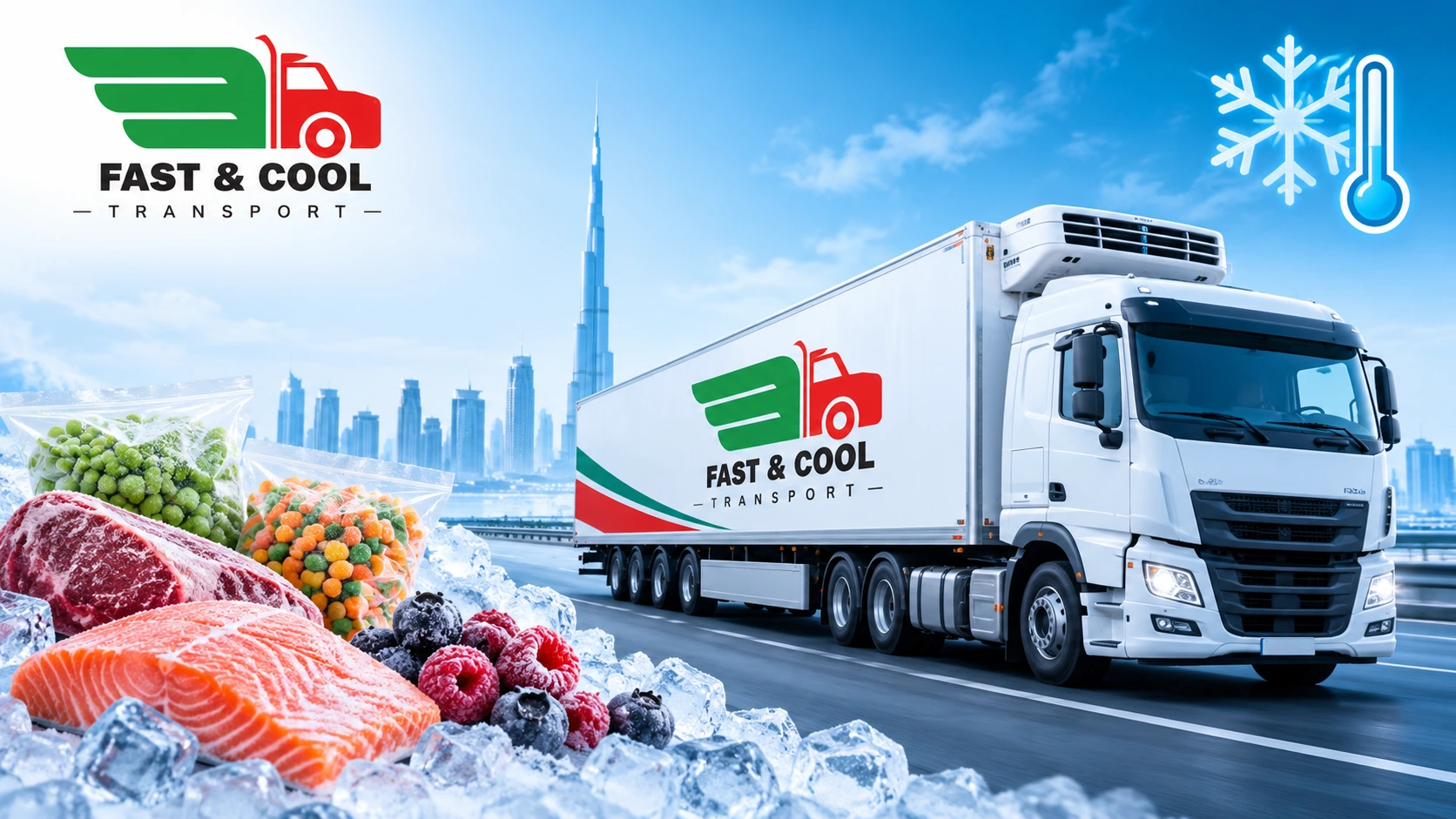
Frozen goods transportation is the movement of products that must stay at -18°C or colder from the moment they leave cold storage until they reach the customer. In the UAE, where summer temperatures pass 45°C, that takes a purpose-built freezer vehicle, a pre-cooled cargo box, disciplined loading and constant temperature monitoring. A single break in that chain can leave a whole load thawed, unsafe and unsellable.
This article explains how frozen goods transportation works in Dubai and across the UAE, what can go wrong, and what to look for in a transport partner.
What Counts as Frozen Goods?
Frozen goods are products stored and sold in a deep-frozen state. Common examples include:
- Ice cream and frozen desserts
- Frozen seafood: fish, prawns, shellfish
- Frozen meat and poultry
- Frozen ready meals, pizza and meal kits
- Frozen vegetables, fruit and french fries
- Frozen pastry, dough and bakery products
- Certain pharmaceuticals, biologics and lab samples with deep-freeze requirements
The standard target for frozen food is -18°C or below. Always check the temperature stated by your manufacturer or supplier, because some products need a lower setpoint.
Why Frozen Transport Is Harder Than Chilled Transport
Chilled goods travel at +2°C to +8°C. Frozen goods need a much lower temperature, and the gap between the outside air and the cargo is far bigger. In 45°C heat, the refrigeration unit must fight a temperature difference of more than 60°C, so every weakness shows up quickly:
- A weak or poorly maintained refrigeration unit
- A cargo box that was not pre-cooled
- Doors left open too long
- Warm product loaded into the vehicle
- Poor airflow around the load
If you are unsure which vehicle suits which product, read our comparison of chiller van vs freezer van.
What Happens When Frozen Goods Thaw?
A temperature failure is not just a quality problem. Thawed food can become unsafe, and a product that has thawed and refrozen often loses its texture, taste and appearance. For businesses, the consequences include:
- Stock write-offs and lost revenue
- Rejected deliveries at hotels, supermarkets and warehouses
- Failed audits and compliance issues
- Damaged customer relationships
Ice cream is especially unforgiving. A short temperature excursion can cause melting and ice crystal growth that cannot be reversed. See our post on ice cream and frozen dessert transport in Dubai.
The Frozen Cold Chain Step by Step
1. Start with product that is already frozen
A freezer vehicle holds temperature; it is not designed to freeze warm goods. Product must be at the correct temperature before it is loaded.
2. Pre-cool the vehicle
The empty cargo box should reach the target temperature before loading starts. A warm box forces the refrigeration unit to work hard from the first minute and can warm the product at the edges.
3. Load quickly and correctly
Load in a cold area where possible, keep door time short, and arrange cartons and pallets so cold air can circulate. Never block the air outlets of the refrigeration unit.
4. Monitor temperature throughout the journey
A visible temperature display is the minimum. A recorded log gives you evidence for customers and audits.
5. Plan the route
In multi-drop routes, every stop means door openings and warm air. Group deliveries, avoid long waits and put the most sensitive products near the last drops where practical. Our article on how route planning protects temperature explains this in detail.
6. Unload fast into cold storage
The last step matters as much as the first. A frozen load left on a hot loading dock can warm quickly. The receiving team should be ready before the vehicle arrives.
Choosing a Frozen Goods Transport Provider
When comparing providers, ask:
- Do the vehicles hold -18°C or colder in 45°C heat? Ask about the unit and its service history.
- Are vehicles pre-cooled before every job?
- Is temperature monitored and recorded?
- Are the cargo boxes clean and suitable for food?
- Are drivers trained in cold chain handling?
- What happens if the unit fails mid-route? A reliable provider has a backup process.
- Can they cover your routes and timing, including same-day and after-hours work?
- Do they offer flexible hire, from a single trip to a monthly arrangement?
Vehicle Options for Frozen Goods Transport
| Vehicle | Typical use |
|---|---|
| Freezer van | City deliveries, restaurants, cafés, small and mid-size loads |
| Freezer truck | Bulk loads, supermarket supply, port-to-cold-store runs |
| Refrigerated truck | Larger loads and longer inter-emirate routes |
If you are comparing rental options, see our post on freezer van rental in the UAE.
Who Needs Frozen Goods Transportation in the UAE?
- Ice cream and dessert brands supplying cafés, hotels and events
- Frozen food distributors moving stock from Jebel Ali and other ports to supermarkets
- Restaurants, hotels and caterers collecting bulk frozen supplies
- Seafood and meat importers moving goods from port to cold store
- E-commerce and meal-kit brands delivering frozen items to customers
- Healthcare and research organisations moving deep-frozen samples
For a wider view of the sector, read our post on frozen food distributors in the UAE.
Common Mistakes in Frozen Goods Transportation
- Using a chiller vehicle for frozen products
- Loading product that is already warming
- Skipping pre-cooling
- Overloading the vehicle and blocking airflow
- Leaving doors open during loading
- Not telling the transport provider the exact temperature needed
- Choosing a provider on price alone
Why Businesses Choose Fast and Cool Transport
Fast and Cool Transport is a cold chain transport company based in Ras Al Khor Industrial Area 2, Dubai.
- Freezer vans and refrigerated trucks for frozen loads of different sizes
- UAE-wide coverage: Dubai, Abu Dhabi, Sharjah, Ajman, Ras Al Khaimah, Fujairah and Umm Al Quwain
- Flexible hire: hourly, daily or monthly, with or without a driver
- Trained drivers: pre-cooling, careful loading and temperature monitoring
- Clear advice: tell us your product and temperature and we will recommend the right vehicle
- Clear quotes: you know the price before the vehicle leaves
Frequently Asked Questions
What temperature should frozen goods be transported at?
Frozen food should be transported at -18°C or colder. Always follow the temperature stated by your supplier, as some products need lower.
What vehicle is used for frozen goods transportation?
A freezer van or freezer truck with an insulated cargo box and a refrigeration unit designed for deep-freeze temperatures.
Can I transport frozen food in a chiller van?
No. A chiller van holds +2°C to +8°C and cannot keep goods at -18°C, so frozen food will thaw.
How do you stop frozen goods from thawing in Dubai heat?
Use a well-maintained freezer vehicle, pre-cool it before loading, load product that is already frozen, limit door openings, monitor temperature and unload quickly into cold storage.
Can I book frozen goods transport for the same day?
Often yes, depending on availability. Call early with your load, pickup and drop-off details.
Can I hire a freezer vehicle with a driver?
Yes. We offer freezer vehicles with a trained driver or without, on hourly, daily and monthly terms.
Request a Frozen Goods Transport Quote
Tell us what you are moving, the temperature it needs and your route, and we will recommend the right freezer vehicle and confirm the price before dispatch.
- Call or WhatsApp: +971 52 277 3136
- Visit us: Ras Al Khor, Industrial Area 2, Dubai, United Arab Emirates
- Email for an instant quote: send us your load, route and timing