
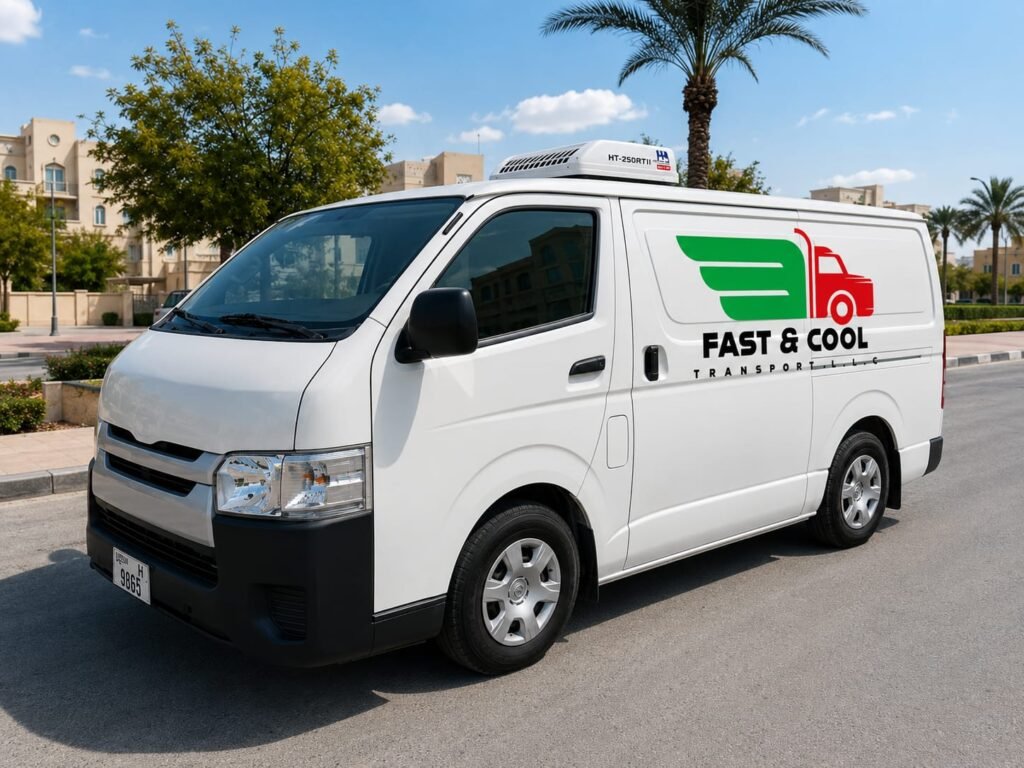
Most people meet the cold chain at its very last second — when a cold bottle of laban lands on a shelf, or a tray of medication reaches a clinic still at the right temperature. What they never see is the seven or eight hours of small, deliberate decisions that got it there. Behind every one of those deliveries is a person who started their day before the sun did.
This is what a typical shift actually looks like from inside the cab of a UAE chiller van — the routine, the heat, and the quiet habits that decide whether a load arrives perfect or arrives spoiled.
A chiller van does not start the day cold. If a driver loads chilled cargo into a box that’s been sitting in a yard overnight, the fridge unit spends the first hour of the route just fighting the heat already trapped inside the panels — and the cargo sits warmer than it should the whole time.
So the day begins with the engine and refrigeration unit running while the van is still empty, pulling the cabin down to temperature before a single carton goes in. On a summer morning that pre-cool can take twenty to thirty minutes. It’s the least visible part of the job and arguably the most important: a warm box loses the load before the route even begins.
UAE summer is the real test. When it’s 45°C outside, every time a rear door opens the box gains heat fast, and the unit has to claw the temperature back before the next drop. A driver who props the door open to shuffle boxes for two extra minutes at each of fifteen stops has quietly added half an hour of warm air to the day.
So the discipline is almost boring: open the door, move the cargo for that stop, close it. Stage the load in delivery order so the right boxes are near the door. Park in shade when there’s a choice. None of it is dramatic. All of it is why the load survives August
A route on paper is a clean line between points. A route in reality is a closed loading bay, a lift that’s out, a security desk that needs a pass, and Sheikh Zayed Road at the wrong hour. The driver absorbs all of it while keeping one eye on the temperature readout. When a stop runs long, the calculation is constant: is the cargo still safe, or does the order of the remaining drops need to change?
This is judgement, and it’s the part of refrigerated transport you can’t automate away. It’s also why a rented chiller van in the UAE comes with a trained driver rather than just keys — the vehicle keeps the cold, but the person keeps the plan.
At the end of the shift, the temperature log tells the honest story of the day — a continuous record showing the cargo stayed inside its band from first pickup to last drop. For a restaurant it’s peace of mind; for a pharmacy or a lab it’s a compliance document. Either way, it’s the proof that all those small, unglamorous habits actually held.
WhatsApp us