
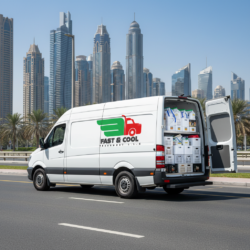
Food Safety in Transit Is Not Optional in Dubai
Dubai’s food industry is one of the most tightly regulated in the Middle East. With millions of residents, tourists, and hospitality professionals relying on the city’s food supply chain every single day, the Dubai Municipality and relevant health authorities have established strict standards for how food must be handled, stored, and transported. For any business involved in moving food products across the city whether you’re a supermarket supplier, a restaurant distributor, a catering company, or a food manufacturer the question of transport compliance is not a matter of preference. It is a legal and ethical obligation.
At the heart of food-safe transport is a principle most food industry professionals know well: HACCP Hazard Analysis and Critical Control Points. Originally developed for NASA’s space food programme, HACCP is now the globally recognised framework for identifying and managing food safety risks at every stage of the supply chain, including transport. In Dubai, operating a HACCP transport vehicle is a requirement for businesses involved in commercial food distribution, and working with a provider that meets these standards is essential for protecting your customers, your products, and your business licence.
This guide explores everything you need to know about food transport van services in Dubai from the different types of food cargo that require specialised cold vehicles to what HACCP compliance actually means on the road, and why Fast and Cool Transport is the partner businesses trust for safe, certified food delivery.
Why Standard Vans Are Never Enough for Food Delivery
A common and costly mistake made by smaller food businesses in Dubai is using standard cargo vans to transport perishable goods particularly over short distances. The assumption is that a short journey doesn’t require refrigeration. In Dubai’s climate, that assumption is dangerous.
When outdoor temperatures exceed 40°C, the interior of a standard parked van can reach 70°C or more within minutes. Even in transit with air conditioning running in the cab, the cargo area of a non-refrigerated vehicle maintains temperatures that accelerate bacterial growth dramatically. The temperature danger zone for food the range between 5°C and 60°C is where pathogens like Salmonella, Listeria, and E. coli multiply fastest. A 20-minute delivery through summer traffic is more than enough time for harmful bacteria to reach dangerous levels in unrefrigerated food.
A food grade refrigerated van eliminates this risk entirely. By maintaining a controlled, consistent temperature throughout transit matched to the specific requirements of the cargo being carried a properly equipped food transport van ensures that every delivery meets the same safety standards as the cold storage facility it came from.
Types of Food Transport and the Right Van for Each
Dubai’s food supply chain is diverse, and different food categories have distinct temperature and hygiene requirements. Understanding which vehicle type suits your specific cargo is essential for both safety compliance and product quality.
Frozen Food Transport
Frozen food transport requires vehicles capable of maintaining temperatures of -18°C or below throughout the entire delivery journey from loading dock to final drop-off point. This applies to frozen meals, frozen vegetables, frozen pastry products, ice cream, and any other food product that has been commercially frozen and must remain solidly frozen until it reaches a commercial freezer or food service kitchen.
In Dubai’s food service sector, frozen food transport is in constant demand from major hypermarkets, hotel central kitchens, airline catering facilities, and fast-food chain distribution centres. Any temperature deviation during transit even a brief rise above -10°C can compromise product integrity, trigger food safety violations, and in some cases render entire batches unfit for sale.
Dairy Transport Van
The dairy transport van category covers fresh milk, yoghurt, soft cheese, cream, butter, and other dairy products that require consistent chilling between 1°C and 4°C. Dairy products are among the most temperature-sensitive food categories, with very narrow windows between safe storage and spoilage. Dubai’s thriving café culture, hotel breakfast operations, and supermarket dairy aisles all depend on tightly managed dairy cold chains operating every day of the year.
A dedicated dairy transport van must also meet stringent hygiene requirements cargo areas must be sanitised regularly to prevent cross-contamination and the build-up of bacteria that could affect subsequent loads.
Meat Transport Truck
Fresh and chilled meat transport truck operations in Dubai serve the city’s enormous hospitality sector, hundreds of butchers, and a growing network of premium online meat delivery platforms. Fresh, unprocessed meat must be maintained at temperatures between 0°C and 4°C as close to freezing as possible without actually freezing. This requires precise refrigeration control and vehicles with high-quality insulation to prevent temperature fluctuation during the multiple door-open events typical of multi-drop meat distribution routes.
Halal certification and food safety compliance are both critical in Dubai’s meat transport sector, and any food grade refrigerated van operating in this space must meet the standards set by the Emirates Authority for Standardisation and Metrology (ESMA) and Dubai Municipality.
Seafood Transport Van
Fresh seafood is among the most perishable food categories in existence. A seafood transport van must maintain temperatures of 0°C to 2°C essentially just above the freezing point of the fish itself to slow bacterial activity and enzymatic degradation that begin the moment a fish leaves the water. Dubai’s world-class fish market, its premium seafood restaurants, and its luxury hotel kitchens all require daily fresh seafood deliveries where the cold chain is managed with absolute precision.
Seafood transport vans must also be built to handle the moisture, odour, and drainage requirements of fish cargo features that only purpose-built, food grade refrigerated vans are equipped to provide.
What Does HACCP Compliance Mean for a Transport Vehicle?
HACCP is a systematic, science-based approach to food safety that identifies potential hazards biological, chemical, and physical and establishes critical control points (CCPs) where those hazards can be prevented, eliminated, or reduced to safe levels. When applied to Food Transport Van, HACCP compliance means:
- Temperature monitoring at all stages A HACCP-compliant HACCP transport vehicle must continuously monitor and record cargo temperature throughout the delivery. Digital temperature loggers or IoT-enabled sensors are used to capture real-time data and generate documentation for compliance purposes.
- Pre-cooling of the cargo area Before loading any food product, the van’s cargo compartment must be pre-cooled to the required temperature. Loading food into a warm vehicle even briefly constitutes a HACCP violation and creates a cold chain break.
- Strict hygiene and cleaning protocols Cargo areas must be cleaned and sanitised between loads, particularly when switching between different food categories. Cross-contamination between, for example, raw meat and ready-to-eat products is a critical food safety risk.
- Driver training and food handling awareness Drivers handling food cargo must be trained in basic food hygiene principles, proper loading and unloading procedures, and the importance of minimising the time food spends outside temperature-controlled conditions.
- Documentation and traceability Every delivery must be documented with temperature records, delivery times, and chain of custody information. This traceability is essential for food safety audits, regulatory inspections, and resolving any disputes about product condition at delivery.
- Fast and Cool Transport operates in full accordance with HACCP principles across its entire fleet, giving food businesses in Dubai the confidence that every delivery meets the compliance standards their industry demands.
Industries Served by Food Transport Van Services in Dubai
The demand for food grade refrigerated van services in Dubai spans a wide ecosystem of businesses:
The hotel and hospitality sector Dubai’s 700-plus hotels require daily multi-category food deliveries covering dairy, meat, seafood, produce, and specialty imports, all managed to strict HACCP standards. The retail and supermarket sector runs high-frequency cold replenishment routes that feed the fresh and frozen aisles of Dubai’s hypermarkets and neighbourhood grocery stores. The food manufacturing and processing sector relies on cold transport to move raw ingredients into production facilities and finished chilled or frozen products out to distribution networks. The catering and events sector uses food transport vans to move prepared and raw food between central kitchens and event venues across the city. The online grocery and food delivery platforms one of Dubai’s fastest-growing sectors depend on last-mile food transport vans to deliver fresh orders directly to residential and commercial addresses with the same cold chain integrity as a physical store.
Conclusion
Food transport in Dubai is not simply a logistics challenge it is a public health responsibility. Every food transport van that operates on Dubai’s roads is part of a vast, interconnected cold chain that protects millions of people’s health every single day. Whether you’re moving frozen food transport loads to a supermarket freezer aisle, running a dairy transport van route for hotel breakfast kitchens, managing a meat transport truck operation for the city’s restaurant sector, or delivering fresh catch via a seafood transport van to fine dining establishments, the standards are the same: keep it cold, keep it clean, and keep it compliant.
Choosing a transport partner that operates HACCP transport vehicles, maintains rigorous hygiene protocols, and understands the full depth of Dubai’s food safety regulatory landscape is one of the most important decisions a food business can make. It protects your customers, your brand, and your licence to operate in one of the world’s most demanding and rewarding food markets.
At Fast and Cool Transport, food safety isn’t a checkbox it’s the foundation of everything we do.
Visit us at: www.fastandcooltransport.com
Fast and Cool Transport — HACCP-compliant food transport van services across Dubai and the UAE.