
When a Degree of Difference Can Cost a Life
In most logistics operations, a brief temperature fluctuation is an inconvenience. In pharmaceutical cold chain transport, it can be catastrophic. A vaccine that has been exposed to temperatures outside its required range even once, even briefly can lose its immunological efficacy entirely. A shipment of insulin that thaws and refreezes during transit can become unsafe for a diabetic patient who has no way of knowing. A biologic medicine compromised during transport may not only fail to treat the patient it was prescribed for but actively cause harm.
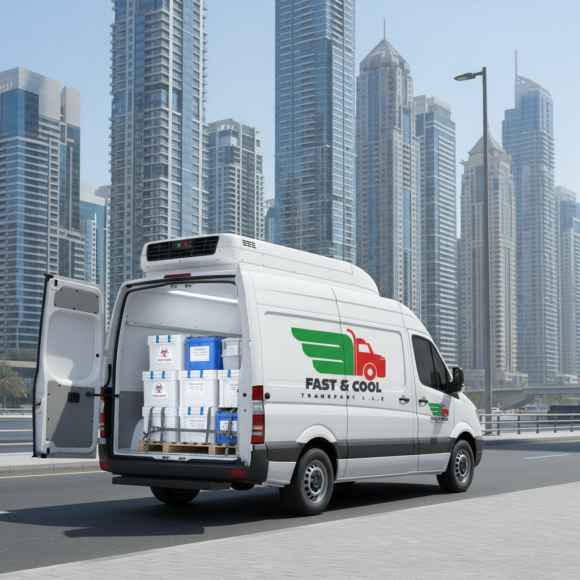
This is the reality of medical refrigerated transport in UAE and it is why the standards governing pharmaceutical transport vans, vaccine transport vans, and the broader cold chain for healthcare products are among the most stringent of any logistics sector in the world.
In this guide, Fast and Cool Transport walks through everything that matters in UAE pharmaceutical cold chain logistics from the temperature requirements and regulatory frameworks that govern the sector to what GMP refrigerated transport and ISO cold transport compliance actually mean in practice, and why choosing the right transport partner is one of the most consequential decisions a pharmaceutical business can make.
The Stakes Are Different in Pharmaceutical Logistics
The pharmaceutical cold chain is categorically different from food or beverage cold transport in one critical respect: the end user of a compromised product is often a patient who is already unwell and who may have no visible way of detecting that the product they received was damaged in transit.
A consumer can see and smell a spoiled piece of meat. A pharmacist dispensing a vaccine that was temperature-compromised during transport cannot tell by looking at it that anything is wrong. The vial looks identical. The label reads the same. But the active components inside may have been irreversibly denatured by heat, rendering the vaccine completely ineffective.
This is why medical refrigerated transport in the UAE operates under a framework of documentation, monitoring, validation, and regulatory compliance that goes far beyond what any other cold logistics sector requires. And it is why pharmaceutical businesses from multinational manufacturers and licensed importers to hospital pharmacies and specialty clinics must work exclusively with transport providers that understand and meet these exacting standards.
Temperature Requirements for Pharmaceutical Cold Transport
Different pharmaceutical products require different temperature conditions, and understanding these categories is the foundation of compliant pharmaceutical transport van operations in the UAE:
Refrigerated (+2°C to +8°C)
Is the most common pharmaceutical cold chain category. This range covers the majority of vaccines, including those for influenza, hepatitis, MMR, and COVID-19. It also covers most biological medicines, insulin products, certain eye drops, and a wide range of specialty medications. Maintaining this precise range not just on average, but consistently and without excursion is the core requirement of the pharmaceutical cold chain.
Controlled Room Temperature (+15°C to +25°C)
Applies to a large category of medicines that do not require refrigeration but must be protected from the extremes of Dubai and Abu Dhabi’s ambient temperatures, which regularly exceed 45°C. A standard non-temperature-controlled vehicle operating in UAE summer conditions is completely unsuitable for these products. A pharmaceutical transport van with controlled ambient cargo management is required.
Frozen (-20°C ± 5°C)
Applies to certain biological products, plasma derivatives, specific vaccines such as the varicella (chickenpox) vaccine, and a growing number of advanced therapy medicinal products including gene therapies and cell-based treatments. Deep freeze transport requires specialist freezer vehicles with validated, independently powered refrigeration systems.
Ultra-Cold (-60°C to -80°C)
Is a newer category brought to public attention during COVID-19 mRNA vaccine distribution. While less commonly required in routine pharmaceutical logistics, the capability for ultra-cold transport exists within specialist UAE cold chain providers for clinical trial materials and advanced biological products.
What GMP Refrigerated Transport in UAE Means
GMP refrigerated transport refers to pharmaceutical distribution carried out in accordance with Good Manufacturing Practice, the internationally recognised quality management framework that governs how pharmaceutical products must be manufactured, stored, and distributed to ensure their safety, quality, and efficacy are maintained throughout the supply chain.
In the context of transport, GMP compliance encompasses several specific requirements:
- Qualification and validation of vehicles Every vehicle used for GMP-compliant pharmaceutical transport must be formally qualified and validated for the temperature range it is intended to maintain. This involves temperature mapping studies that demonstrate the vehicle can hold required temperatures uniformly throughout the cargo area, including under worst-case conditions such as door-open events during loading.
- Standard Operating Procedures (SOPs) GMP transport operations must be governed by written, approved SOPs covering vehicle loading, temperature monitoring, excursion response, cleaning and hygiene, driver training, and documentation. Every delivery must follow these procedures without deviation.
- Temperature excursion management When a temperature excursion occurs meaning the cargo temperature rises or falls outside the required range there must be a documented process for assessing the impact on product quality, reporting the excursion, and deciding whether the affected product can still be used or must be quarantined and destroyed.
- Chain of custody documentation Every pharmaceutical cold chain delivery must generate a complete, unbroken chain of custody record that documents who handled the product, at what temperature, for how long, and at what times. This documentation is essential for regulatory inspections and product quality investigations.
Fast and Cool Transport maintains GMP-aligned operational practices across its pharmaceutical transport operations, ensuring that the businesses we serve remain compliant with both UAE Ministry of Health and Prevention (MoHAP) requirements and international pharmaceutical distribution standards.
ISO Cold Transport in the UAE What It Means and Why It Matters
ISO cold transport refers to temperature-controlled logistics operations conducted in accordance with relevant International Organization for Standardization standards. The most directly applicable standard for pharmaceutical cold chain transport is ISO 9001 the quality management systems standard — combined with GDP (Good Distribution Practice) guidelines published by the World Health Organization and adopted by UAE regulatory authorities.
For pharmaceutical businesses operating in the UAE, choosing a transport partner with ISO-aligned quality systems provides a documented assurance that the provider’s processes, equipment, training, and monitoring systems meet internationally benchmarked standards. This is increasingly a requirement rather than a preference, many pharmaceutical manufacturers and hospital procurement departments now require proof of ISO-aligned or GDP-compliant operations from their logistics partners before awarding contracts.
The UAE’s pharmaceutical regulatory environment, overseen by MoHAP at the federal level, the Dubai Health Authority (DHA) in Dubai, and the Department of Health (DoH) in Abu Dhabi, is closely aligned with international GDP and GMP standards, meaning that compliance with UAE regulations and compliance with international best practice are largely synonymous in this sector.
The Vaccine Transport Van A Special Case
Of all pharmaceutical cold chain categories, vaccine transport van operations carry perhaps the highest public health significance. Vaccines are the cornerstone of the UAE’s preventive healthcare strategy, and maintaining vaccine potency from manufacturer to administration point depends entirely on an unbroken cold chain.
The World Health Organization’s guidelines for vaccine transport specify that vaccines must never be frozen unless they are explicitly designed for frozen storage, that temperature monitoring must be continuous and documented throughout transit, and that vaccines exposed to temperatures outside their specified range must be quarantined and assessed before use, never administered on the assumption that they are still potent.
In the UAE, vaccine distribution is managed through a combination of government health authority channels and licensed private pharmaceutical distributors. All parties in this chain including transport providers must demonstrate cold chain competence through documented systems, validated equipment, and trained staff.
A vaccine transport van operated by Fast and Cool Transport is equipped with calibrated temperature loggers that generate continuous digital records, GPS tracking for full route visibility, and pre-cooled cargo areas validated to maintain +2°C to +8°C throughout typical UAE delivery journeys — including the extended durations that cross-emirate routes to Abu Dhabi, Al Ain, or Ras Al Khaimah may involve.
Who Requires Medical Refrigerated Transport Services in the UAE?
The demand for compliant medical refrigerated transport in the UAE spans a wide range of organisations and business types: licensed pharmaceutical importers and distributors moving product from UAE ports and airports into national distribution networks; hospital pharmacies and specialty clinics receiving regular cold chain deliveries of biological medicines, vaccines, and temperature-sensitive therapies; diagnostic laboratories transporting biological samples, reagents, and reference materials under controlled temperature conditions; clinical research organisations managing temperature-sensitive investigational medicinal products for trials; and medical device companies distributing products that include biological components requiring cold chain management.
Conclusion
Pharmaceutical and vaccine cold chain logistics in the UAE represents the highest-stakes application of temperature-controlled transport that exists. The consequences of a cold chain failure in this sector are measured not in financial loss alone, but in compromised patient outcomes and eroded public health confidence. For every business involved in moving medicines, vaccines, biologics, or healthcare products across Dubai, Abu Dhabi, Sharjah, and the wider UAE, the standard of transport partner they choose reflects directly on the standard of care they provide.
GMP refrigerated transport, ISO cold transport alignment, validated vehicle qualification, continuous temperature monitoring, and rigorous documentation are not premium add-ons in pharmaceutical logistics they are the baseline. A pharmaceutical transport van that cannot demonstrate full compliance with these standards has no place in the healthcare supply chain, regardless of how competitive its pricing may appear.
Fast and Cool Transport is committed to meeting and maintaining those standards, because in medical cold chain logistics, anything less is simply not good enough.
Visit us at: www.fastandcooltransport.com