
Express Cold Chain for Perishables: Beating the Clock in Dubai Traffic
Perishables are the most honest cargo in logistics. They don’t negotiate. A pallet of leafy greens, a crate of fresh fish, or a batch of dairy is quietly losing quality from the moment it’s harvested or packed — and every hour outside its ideal temperature shortens its saleable life. In a city like Dubai, where summer tarmac and stop-start traffic push heat into everything, the margin for error is thinner still.
Express cold chain is the answer to that clock. This article explains why perishable delivery is a race against shelf life, how pre-cooling and routing protect quality, and what fresh suppliers should expect from a genuinely fast chilled service.
| In short Express perishable delivery means moving fresh produce, dairy or seafood fast enough — and cold enough — that it reaches the shelf in peak condition. The two decisive factors are pre-cooling (getting the cargo and vehicle to temperature before transit) and routing (minimising time, stops and heat exposure). Speed protects shelf life, but only when it never breaks the cold chain. |
The shelf-life clock is your real deadline
Every perishable has a saleable life measured in hours and days, and warmth spends it faster. Fresh produce keeps respiring after harvest, generating its own heat; seafood degrades quickly the moment it warms; dairy has little tolerance for temperature swings. Each degree above the ideal range doesn’t just risk spoilage at the end — it silently shortens how long the product stays sellable once it arrives.
That reframes the whole delivery. You are not just moving a box from A to B; you are protecting the remaining shelf life your customer is paying for. A fast, cold delivery hands the retailer more selling days. A slow or warm one hands them markdowns and waste.
Pre-cooling: the first mile decides the last
The most expensive cold chain mistake happens before the vehicle even moves. Load warm produce into a cold van and the refrigeration unit spends the journey fighting to remove field heat it should never have carried — and it may never fully catch up. Pre-cooling the cargo, and pre-cooling the vehicle, is what makes express delivery actually work.
A well-run express service pulls the van down to the target temperature before it reaches you, so your goods enter a cold box, not a warm one. Combined with produce that’s already been cooled after harvest, this keeps the whole journey inside range instead of playing catch-up.
Routing and traffic: Dubai’s specific challenge
Dubai adds its own difficulty. Peak-hour congestion on Sheikh Zayed Road, long industrial runs out to Al Quoz or Ras Al Khor, and summer ambient temperatures well above 40°C all conspire against a perishable load. The answer is planning: timing runs around the worst congestion, sequencing multi-drop routes so the most sensitive cargo moves first, and keeping door-opening events short and few.
This is where express perishable delivery differs from ordinary rush delivery. Anyone can drive fast. Protecting temperature at speed — through traffic, in summer, across multiple stops — is a discipline.
Different perishables, different needs
“Perishable” is not one temperature. An express partner worth using tailors the vehicle and handling to the cargo:
| Cargo | Typical target range | Express priority |
| Fresh produce / leafy greens | 0°C to +5°C | Fast dispatch; minimise respiration heat build-up |
| Dairy | +2°C to +6°C | Stable temperature; avoid swings on multi-stop routes |
| Fresh seafood | 0°C to +2°C (on ice) | Speed is critical; degrades fastest of all |
| Frozen goods | −18°C and below | Freezer vehicle; protect against thaw on long runs |
| Flowers | +2°C to +8°C | Gentle handling plus tight temperature control |
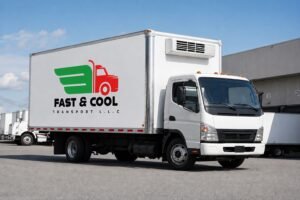
For chilled fresh goods, a purpose-built chiller van holds the 0°C to +8°C band cleanly; for anything sub-zero, a freezer vehicle is essential. Matching the vehicle to the cargo is the difference between arriving in peak condition and arriving marked-down.
Express vs. standard chilled delivery
Standard chilled delivery is scheduled and predictable — a good fit for routine restocking. Express exists for the moments routine can’t cover: a late-landing import, an unexpectedly large order, a supplier gap, or produce that simply cannot wait for tomorrow’s run.
Used well, express is a quality tool, not just a speed tool. When freshness is the product you sell, getting it there fast and cold is the whole game. For urgent chilled runs across Dubai and the UAE, a same-day chiller van gets peak-condition cargo where it needs to be, today.
Frequently Asked Questions
What counts as express perishable delivery?
It’s a fast, temperature-controlled run for goods that can’t wait for a scheduled route — typically same-day, in a pre-cooled vehicle matched to the cargo. The point is not just speed but protecting shelf life, so the goods arrive cold enough to still command full price.
Why is pre-cooling so important for fresh produce?
Because loading warm produce into a cold van forces the refrigeration to fight field heat it should never have carried, and it may never fully recover the target temperature. Pre-cooling both the cargo and the vehicle keeps the whole journey in range from the first minute.
Can you deliver perishables during Dubai peak traffic and summer heat?
Yes — that’s exactly what express cold chain is built for. The tactics are planning runs around the worst congestion, sequencing multi-stop routes so the most sensitive cargo moves first, and keeping door openings short so heat can’t get in.
Do different perishables need different vehicles?
Often, yes. Chilled produce, dairy and flowers sit in the 0°C to +8°C band and suit a chiller van, while frozen goods need a freezer vehicle at −18°C or below. Matching the vehicle to the cargo’s target range is what keeps quality intact.
How is express different from your standard chilled delivery?
Standard delivery is scheduled and ideal for routine restocking, while express is the urgent option for late imports, large orders or supplier gaps. Reserve express for the exceptions and it stays fast and reliable when freshness is genuinely on the line.