
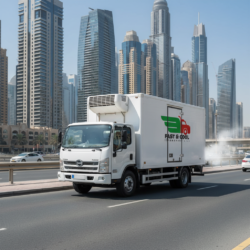
The Gap Between Ambient and Refrigerated and Why It Matters
In the world of cold chain logistics, most conversations gravitate toward the extremes: the vaccine that must stay between 2°C and 8°C, the ice cream that must never rise above -18°C. These are the cases where the consequences of temperature failure are immediate, visible, and unambiguous.
But there is a vast and commercially significant middle ground a category of goods that do not require active refrigeration yet cannot survive unprotected in a standard cargo van on a Dubai summer afternoon. Chocolate that softens and blooms at 32°C. Certain medications that degrade at temperatures above 25°C. Cosmetics whose active ingredients break down under heat stress. Wine and premium spirits that cook inside a metal cargo box parked in direct sun. Candles, wax products, and adhesives that arrive deformed. Leather goods and luxury accessories that suffer irreversible heat damage before they ever reach the customer.
For all of these products, the answer is not a freezer van or a chiller van. The answer is insulated truck a temperature-controlled environment that uses passive and active thermal management to keep cargo within a safe operating range without the energy cost, operational complexity, or overkill of full refrigeration. In Dubai, where a standard uninsulated metal cargo van can reach internal temperatures of 70°C or more when parked in direct sunlight, the case for insulated truck rental and insulated van rental services is compelling for a much wider range of businesses than typically recognise it.
Table of Contents
What Insulated Transport Actually Means
The term “insulated truck” covers a spectrum of solutions rather than a single vehicle type, and understanding this spectrum is essential for businesses evaluating their options.
At the passive end of the spectrum, an insulated truck uses high-density thermal insulation in the walls, floor, ceiling, and doors of the cargo compartment to slow the transfer of heat from the exterior to the interior. Without any active cooling, a well-insulated cargo box will maintain a significantly lower internal temperature than the ambient external environment particularly during the first hours of operation and for shorter journey durations. The quality and thickness of the insulation, typically measured in its R-value (thermal resistance), directly determines how long and how effectively the passive barrier holds.
At the active end of the spectrum, a temperature controlled truck combines insulation with a cooling or heating system which may be less powerful than a full chiller van refrigeration unit to maintain a target temperature range. This might be a small auxiliary air conditioning unit maintaining cargo at 20°C to 25°C, a fan-assisted air circulation system preventing hot spots, or a sophisticated dual-zone climate management system that maintains different temperatures in different cargo sections simultaneously.
Between these poles sit a range of hybrid solutions including phase-change coolant panels, dry ice integration, and pre-conditioned insulated cargo boxes all designed to extend the effective temperature protection of insulated transport beyond what passive insulation alone can provide.
Industries and Products That Depend on Insulated Transport in Dubai
The breadth of commercial activity in Dubai that relies on insulated transport services is considerably wider than the food and pharmaceutical sectors that dominate most cold chain discussions:
Luxury goods and fashion retail
Dubai is one of the world’s premier luxury retail destinations. Premium leather handbags, high-end footwear, luxury watches in their packaging, and delicate fashion garments all suffer tangible, often irreversible damage when exposed to the extreme heat of a non-insulated vehicle. For the luxury retail brands and boutiques distributing products across Dubai’s malls and hospitality accounts, insulated van rental provides the cargo protection their products demand without the overkill of refrigeration.
Chocolates and confectionery
Dubai’s premium confectionery market is substantial. Artisan chocolate houses, gifting companies, and confectionery importers all need cargo temperatures that do not exceed approximately 20°C to 22°C to prevent softening, surface bloom, and structural deformation. This requirement sits above the chiller van range but demands far more thermal management than a standard cargo van provides.
Wine, spirits, and premium beverages
While alcohol regulations govern its commercial distribution in the UAE, licensed importers, hotel beverage operations, and licensed retailers all require protected transport for wine and premium spirits. Heat is among wine’s greatest enemies, and a single transit in an uninsulated Dubai delivery vehicle during summer can inflict the kind of heat damage commonly called “cooking” that experienced sommeliers detect immediately in the glass.
Cosmetics, perfumes, and personal care
The UAE is one of the highest per-capita cosmetics and perfume markets in the world. Many premium skincare formulations, organic beauty products, and fragrance compositions degrade measurably under sustained heat exposure. Distribution across Dubai’s retail and hospitality accounts requires insulated transport services that protect product integrity from warehouse to store shelf.
Candles, wax products, and home fragrance
A fast-growing category in Dubai’s luxury home goods market, premium candles and wax-based products deform, crack, and lose presentation quality when transported in heat. Temperature controlled truck solutions that maintain ambient cargo conditions well below Dubai’s outdoor peak prevent this product damage entirely.
Electronics and technology
Certain electronic components, batteries, and assembled devices have documented maximum storage and transport temperatures. Extended exposure to the temperatures achievable inside a non-insulated vehicle in Dubai can void warranties, trigger safety mechanisms, and in some cases damage components permanently.
Printed materials, publications, and art
High-quality printed materials, exhibition graphics, fine art reproductions, and premium packaging all suffer from heat and humidity stress during transport in Dubai. Insulated vehicles protect the physical and visual integrity of these materials across the last-mile delivery journey.
Insulated Truck Rental vs Chiller Van Rental Choosing the Right Solution
A question that comes up regularly for Dubai businesses evaluating their transport options is whether they need a full chiller van with active refrigeration or whether an insulated truck rental will adequately meet their requirements. The answer depends on three factors:
The cargo’s maximum tolerable temperature
If your product can safely remain at temperatures up to 25°C or even 30°C and simply needs protection from peak ambient heat rather than active cooling to a specific low temperature, passive insulated transport is likely adequate for shorter journeys and cooler periods of the day. For products with maximum temperatures below 15°C, active refrigeration becomes necessary.
Journey duration and conditions
Passive insulation’s effectiveness diminishes over time and with repeated door openings. For short to medium journey durations typically under two hours in UAE conditions a high-quality insulated vehicle can maintain adequate protection for many product categories. For longer journeys, multi-stop routes with frequent door openings, or stationary holding periods, active temperature control provides more reliable protection.
The regulatory and compliance context
For any product governed by a specific temperature compliance requirement pharmaceutical controlled room temperature products, certain food categories, or export cargo with documented temperature requirements the cargo’s compliance documentation must reflect actual monitored temperatures. Passive insulated transport does not generate the temperature logging data that active temperature controlled truck systems provide. If compliance documentation is required, active monitoring and control is necessary regardless of the product’s apparent temperature tolerance.
What to Confirm When Booking Insulated Transport in Dubai
When arranging insulated van rental or insulated truck rental in Dubai, the details that most directly affect delivery quality include the insulation specification of the cargo area specifically the panel thickness and whether the insulation has been assessed for UAE peak ambient conditions rather than just standard European test environments; whether the vehicle is equipped with any active temperature management in addition to passive insulation; the cargo door sealing quality and how the vehicle handles frequent door-open events on multi-stop routes; and whether the provider can document cargo temperature throughout the delivery journey for any compliance or quality assurance purpose.
For businesses with premium or regulated cargo, discussing these specifics with a provider before booking rather than assuming all insulated transport is equivalent makes the difference between a solution that genuinely protects the product and one that merely looks adequate on paper.
Conclusion
Insulated truck rental and insulated van rental in Dubai serve a commercial need that sits precisely in the space that full refrigeration overserves and standard cargo transport dangerously underserves. For the enormous range of products luxury goods, confectionery, cosmetics, wine, technology, printed materials, and more that require thermal management without active refrigeration, insulated transport services represent the right solution: proportionate, efficient, and purpose-matched to the actual requirements of the cargo.
In Dubai, where the ambient environment is itself the greatest threat to temperature-sensitive goods, the discipline of choosing the right level of thermal protection rather than defaulting to either extreme is a mark of logistical maturity. A temperature controlled truck that maintains 22°C for a chocolate delivery is not a compromise between a chiller and a standard van. It is precisely the right tool for the job nothing more, nothing less.
And in logistics, as in most things, the right tool used precisely is always better than the wrong tool used extensively.
Visit us at: www.fastandcooltransport.comFast and Cool Transport Insulated truck and van rental, temperature controlled transport services across Dubai and the UAE